Famous temple you visit in Mathura and Vrindavan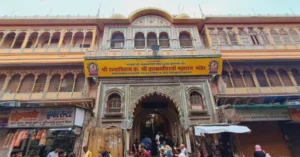
Why Dwarkadhish Temple Holds Such Importance
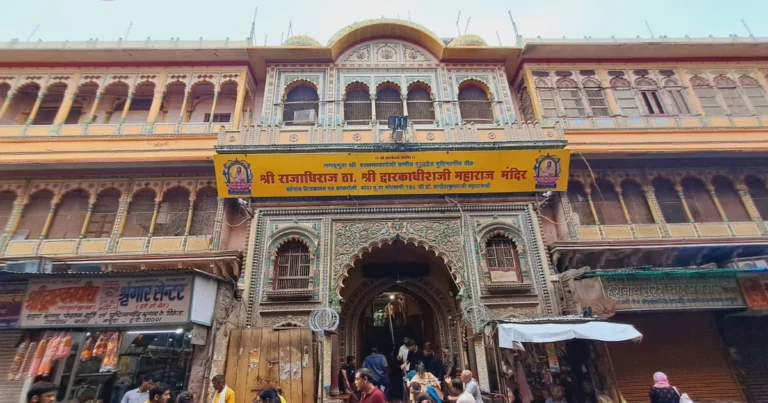
The Dwarkadhish Temple is more than just a temple; it’s the spiritual heartbeat of Mathura:
- Historical Significance: Built in 1814 by Seth Gokul Das Parikh, treasurer of the Scindia royal family of Gwalior, it reflects the rich Vaishnavite tradition.
- Religious Value: This temple belongs to the Pushti Marg (Vallabhacharya Sampradaya) and follows age-old rituals every day without fail.
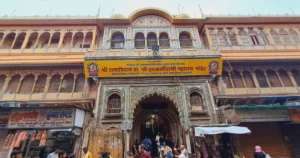
- Architectural Splendor: It’s a blend of Rajasthani and Mughal architectural styles. The temple features intricately carved pillars, domes, and vibrant paintings narrating episodes from Krishna’s life.
- Festivals & Rituals: Celebrations of Janmashtami, Holi, Diwali, and Jhulan Yatra here are globally renowned, attracting lakhs of devotees annually
Summer Timings of Dwarkadhish Temple (April to October)
In summer, the temple opens early and closes in the late evening.
- Morning Darshan: 6:30 AM – 10:30 AM
- Evening Darshan: 4:00 PM – 7:00 PM
Summer Aarti Timings:
- Mangla Aarti (Wake-Up Aarti): 6:30 AM – 7:00 AM
- Shringar Aarti (Morning Decoration): 7:40 AM – 7:55 AM
- Gwal Aarti (Offering Butter & Milk): 8:25 AM – 8:45 AM
- Rajbhog Aarti (Main Meal): 10:00 AM – 10:30 AM
- Utthapan Aarti (Waking Lord from Rest): 4:00 PM – 4:20 PM
- Bhog Aarti (Evening Offering): 4:45 PM – 5:05 PM
- Sandhya Aarti (Sunset Ritual): 5:20 PM – 5:40 PM
- Sayan Aarti (Lord Retiring for the Night): 6:30 PM – 7:00 PM
Local Tip: Arrive at least 20–30 minutes before Mangla or Sandhya Aarti. These are the most divine and crowded aartis in summer.
Winter Timings of Dwarkadhish Temple (November to March)
In the winter months, evening darshan begins earlier.
Darshan Timings:
- Morning Darshan: 6:30 AM – 10:30 AM
- Evening Darshan: 3:30 PM – 6:00 PM
Winter Aarti Timings:
- Mangla Aarti: 6:30 AM – 7:00 AM
- Shringar Aarti: 7:40 AM – 7:55 AM
- Gwal Aarti: 8:25 AM – 8:45 AM
- Rajbhog Aarti: 10:00 AM – 10:30 AM
- Utthapan Aarti: 3:30 PM – 3:50 PM
- Bhog Aarti: 4:20 PM – 4:40 PM
- Evening Aarti: 4:55 PM – 5:10 PM
- Shayan Aarti: 6:00 PM – 7:00 PM
Local Tip: Winter evenings at the temple are magical. Attend the Sandhya Aarti as lamps are lit all around, creating an ethereal glow.
Entry Fees, Dress Code for Dwarkadhish Temple
- Entry Fees: Free entry for all devotees. Donations are voluntary and help in temple upkeep.
- Dress Code: Modest and comfortable attire is recommended. Traditional Indian wear is preferred.
- Footwear: Footwear is not allowed inside. Use designated stands outside the temple.
- Photography: Prohibited inside the sanctum; allowed in outer courtyards only if permitted.
- Security Checks: During festivals, security is tight; avoid carrying large bags or valuables.
Historical & Cultural Significance
- The temple is known for its unique Seva Tradition, where every ritual is treated as serving the Lord personally.
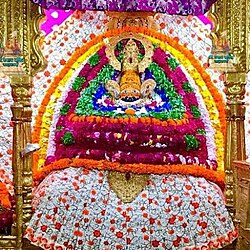
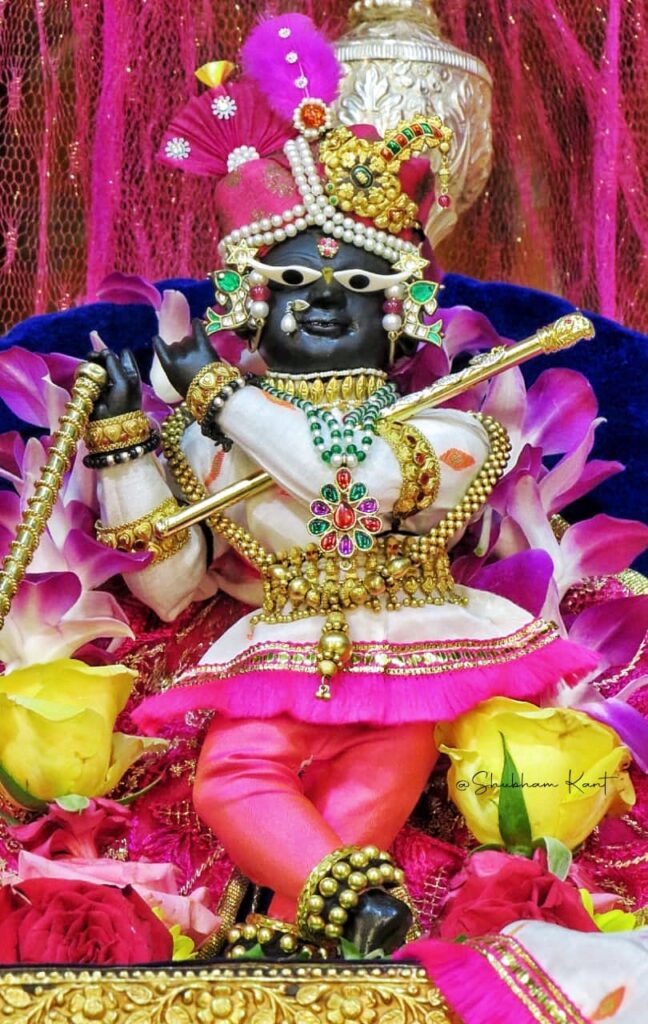
- The idol of Dwarkadhish is made of black marble and is adorned with new clothes and jewelry daily.
- Each festival has its own ritualistic decoration. For instance, during Jhulan Yatra, the deity is placed on a decorated swing (jhula) symbolizing joy and celebration.
- The temple has been a continuous center for Vaishnavite Philosophy, attracting scholars and saints for centuries.
Insider Fact: The temple’s daily prasad includes traditional Mathura sweets like peda and makhan-mishri, which are a must-try.
Best Time to Visit Dwarkadhish Temple
- October to March: Pleasant weather, ideal for sightseeing and attending festivals.
- Major Festivals: If you wish to see the temple in its full grandeur, plan during Janmashtami, Holi, or Diwali.
- Weekday Advantage: Mondays to Thursdays are relatively less crowded than weekends and festival days.
Places You Shouldn’t Miss Near Dwarkadhish Temple
- Vishram Ghat: The holiest ghat on the Yamuna River where Krishna is believed to have rested after defeating Kansa.
- Shri Krishna Janmabhoomi: The exact birthplace of Lord Krishna, just 10 minutes away.
- Mathura Museum: One of India’s oldest museums with Gupta and Kushan-era artifacts.
- Gita Mandir: Famous for walls engraved with all 700 verses of the Bhagavad Gita.
- Vrindavan’s Banke Bihari Temple: Around 12 km away, a spiritual must-visit for Krishna devotees.
Travel Information
- By Road: Mathura is connect to Delhi (150 km) and Agra (60 km) via NH-19.
- By Train: Mathura Junction (MTJ) is 4 km from the temple. Autos and e-rickshaws are available.
- By Air: Agra Airport (60 km) is nearest; Delhi’s IGI Airport is 150 km away.
Travel Tip: Book cabs through trusted services or local operators to avoid last-minute hassles.
Lesser-Known Facts to Enrich Your Visit
- The temple has a secret underground chamber where rare manuscripts and treasures are preserved.
- During Holi, the temple distributes natural flower-based colors as prasad.
- The temple’s annual Jhulan Yatra uses swings made from silver, gold, and sometimes flowers alone.